Formula One
Posted on June 10th, 2025
Formula One Grand Prix Racing and Private Jet Travel
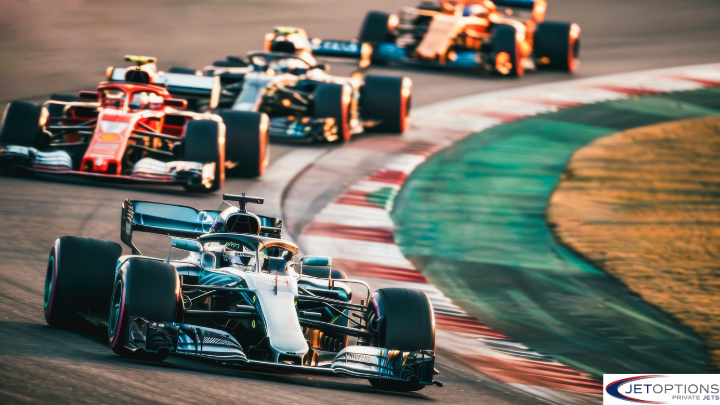
Formula One, also known as Formula 1 or F1, is the world’s premier single-seater motor racing championship. Officially titled the FIA Formula One World Championship, the series is governed by the Fédération Internationale de l’Automobile (FIA) and represents the pinnacle of motorsport in terms of speed, technology, and global appeal. Since its debut in 1950, Formula One has captivated fans with its high-performance vehicles, elite drivers, and an annual calendar of Grand Prix races held on some of the most iconic circuits worldwide.
What Is Formula One?
The name “Formula” refers to a strict set of regulations that each team and driver must adhere to. These rules govern car construction, engine specifications, safety measures, and competitive fairness. Every car on the grid must comply with these technical standards, ensuring a level playing field while fostering innovation among competing manufacturers and race teams.
F1 cars are cutting-edge machines engineered for speed, aerodynamics, and performance. Built with lightweight materials like carbon fiber, these cars include advanced features such as:
- Hybrid turbocharged engines (since 2014)
- Carbon-carbon disc brakes for optimal stopping power
- HANS systems (Head and Neck Support) for driver safety
- Aerodynamic bodywork to reduce drag and enhance downforce
Each driver is limited to a specified number of power units per season, currently capped at three. Exceeding this limit results in grid penalties—adding a strategic layer to season-long performance.
The Global Formula One Calendar
The Formula One World Championship spans the globe with annual races across multiple continents. From Monaco and Silverstone to Singapore, Austin, and Abu Dhabi, the F1 calendar features a mix of street circuits and dedicated racetracks, each with unique challenges and characteristics. Weather, track conditions, and in-race incidents can greatly affect team strategy, creating unpredictability that enhances the thrill of each Grand Prix.
Among the most popular and prestigious races are:
- Monaco Grand Prix (Monte Carlo)
- British Grand Prix (Silverstone)
- Italian Grand Prix (Monza)
- United States Grand Prix (Austin)
- Mexican Grand Prix (Mexico City)
- Japanese Grand Prix (Suzuka)
- Las Vegas Grand Prix (Las Vegas Strip)
- Abu Dhabi Grand Prix (Yas Marina Circuit)
Each race weekend includes practice sessions, qualifying, and the Grand Prix itself, typically lasting up to two hours or a maximum of 305 kilometers (190 miles).
The Future of Formula One
Formula One continues to evolve with a strong focus on sustainability and innovation. In 2026, the next-generation power unit is scheduled for introduction. This engine will operate using 100% sustainable fuels, aligning with F1’s goal of achieving net-zero carbon emissions by 2030. These technological advancements ensure that the sport remains both exciting and environmentally conscious.
Hybrid engines, energy recovery systems, and advanced telemetry make F1 one of the most advanced and data-driven motorsports on the planet.
Flying Private to Formula One Events
For VIPs, sponsors, and fans alike, traveling by private jet offers the most convenient and luxurious way to experience Formula One. With events held across the globe, many F1 destinations have nearby airports equipped to handle private aircraft of all sizes. JetOptions Private Jets specializes in arranging exclusive charter flights to Grand Prix locations, offering:
- Flexible scheduling tailored to your itinerary
- Direct access to regional and executive airports near the circuits
- Ground transportation coordination and on-site concierge service
- Worldwide coverage, from Europe to North America, the Middle East, and Asia
Some of the most popular Grand Prix events for private jet charter include:
- Monaco GP: Arrivals at Nice Côte d’Azur Airport (LFMN/NCE)
- Las Vegas GP: Arrivals at Las Vegas Harry Reid (KLAS) or North Las Vegas (KVGT)
- Austin GP: Arrivals at Austin-Bergstrom Executive Terminals (KAUS) or Austin Executive Airport
- Abu Dhabi GP: Arrivals at Al Bateen Executive Airport (OMAD) or Abu Dhabi Intl. (OMAA)
- Miami GP: Private arrivals into Opa-locka Executive Airport (KOPF) or Miami Executive (KTMB)
Charter a Private Jet with JetOptions
When you charter a private jet to Formula One events with JetOptions, you travel with efficiency, discretion, and luxury. Whether attending as a team executive, partner, or motorsport enthusiast, our team ensures every detail is handled—from airspace clearances and ramp access to in-flight catering and VIP ground transfers.
Experience the speed, prestige, and glamour of Formula One from the skies. Fly with JetOptions to the world’s top racing events in comfort and style.
✈️ Request a Private Jet Quote for Formula One Events
Travel to Grand Prix destinations worldwide in luxury and style with JetOptions. Request a custom quote for your private jet charter to the next Formula 1 race.
Charter and fly to private jet events around the globe with JetOptions Private Jets.
