Special Charter Category – Dornier 328J
30 Passengers
252 Baggage Capacity
466 mph Airspeed
1,703 Range
7.2 Cabin Width
6.2 Cabin Height
34 Cabin Length
Enclosed Lavatory Style
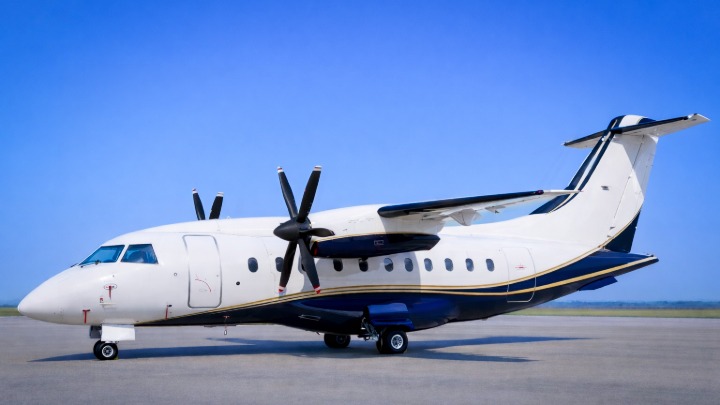
The Dornier 328JET is a legacy regional jet aircraft developed as a jet-powered evolution of the Dornier 328 turboprop. Designed in the late 1990s, the 328JET was intended to provide regional airlines with higher cruise speeds and improved passenger comfort while retaining the robust, short-field performance characteristics of the original 328 airframe.
Entering service in 1999, the Dornier 328JET was produced in limited numbers and primarily operated on short- to medium-range regional routes. While no longer part of mainstream airline fleets, the aircraft remains notable for its spacious cabin, high-mounted engines, and distinctive stand-up interior relative to its passenger capacity.
This aircraft listing is provided for informational reference only. The Dornier 328JET is a legacy regional jet and is not part of JetOptions’ modern private jet charter fleet.
The Dornier 328JET was developed by Fairchild Dornier as a response to airline demand for faster regional service without sacrificing performance at smaller airports. Rather than designing a new airframe, Dornier adapted the proven 328 turboprop platform and equipped it with Pratt & Whitney PW306B turbofan engines, significantly increasing cruise speed and altitude capability.
Despite strong performance, the program was ultimately constrained by market conditions and the manufacturer’s financial difficulties in the early 2000s, resulting in a relatively small global fleet.
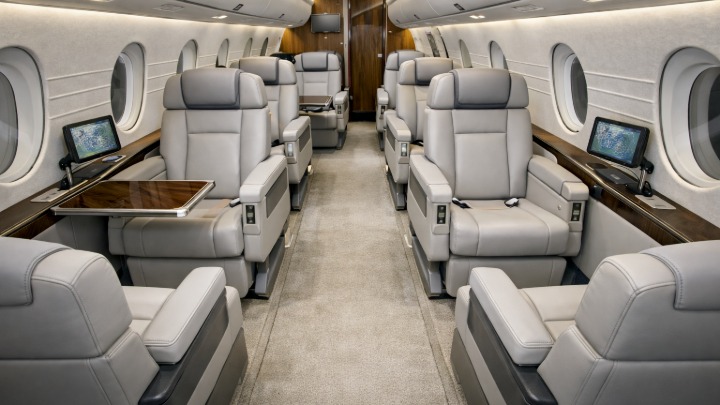
In standard airline configuration, the Dornier 328JET typically seats 30 to 33 passengers in a single-class layout. The aircraft is well known for its:
Stand-up cabin height for most passengers
Wide aisle and large windows for a regional jet
Five-abreast seating (1–2 configuration)
Large baggage compartment for its size class
Unlike modern business jets, the 328JET was designed primarily for regional airline efficiency, not luxury private aviation. Interiors generally reflect commercial layouts rather than VIP or executive configurations.
Key operational characteristics of the Dornier 328JET include:
High cruise speed for its size class
Strong climb performance
Excellent short-runway capability
Ability to operate at regional and secondary airports
These attributes made it well-suited for niche regional markets and challenging airport environments.
The Dornier 328JET saw limited service across Europe, North America, and Asia. Over time, most passenger-configured aircraft were retired due to fleet standardization, maintenance considerations, and the emergence of newer regional jet designs.
Today, the remaining 328JET aircraft are typically found in specialized or limited-use roles, including:
Government or institutional transport
Corporate or organizational shuttle operations
Special mission or utility applications
The Dornier 328JET represents a transitional chapter in regional aviation, combining turboprop-derived airframe strength with jet propulsion. While its production run was brief, the aircraft remains respected for its engineering quality, operational versatility, and uniquely spacious cabin within the regional jet category.
