Special Charter Category – CRJ 200

50 Passengers
485 Baggage Capacity
528 Airspeed
1,345 Range
8.3 Cabin Width
6.1 Cabin Height
40.6 Cabin Length
Enclosed Lavatory Style
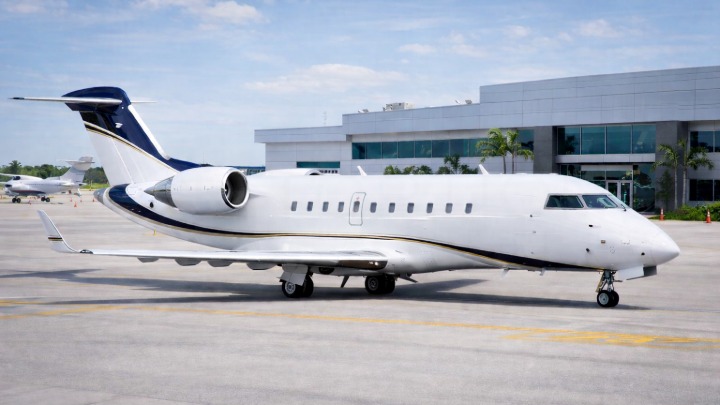
The Bombardier CRJ-200 is a legacy regional jet developed as part of the Canadair Regional Jet (CRJ) family. Introduced into airline service in the mid-1990s, the CRJ-200 was designed to serve short-haul regional routes, connecting smaller markets to major airline hubs with jet-powered efficiency.
Derived from the earlier CRJ-100, the CRJ-200 features upgraded General Electric CF34-3 engines, improving performance and reliability. In a typical airline configuration, the aircraft seats 40 to 50 passengers in a single-class cabin layout and is optimized for short- to medium-range operations.
The CRJ-200 is characterized by:
Narrow-body regional jet design
Low cabin height and compact cross-section
Five-abreast seating (2–3 layout)
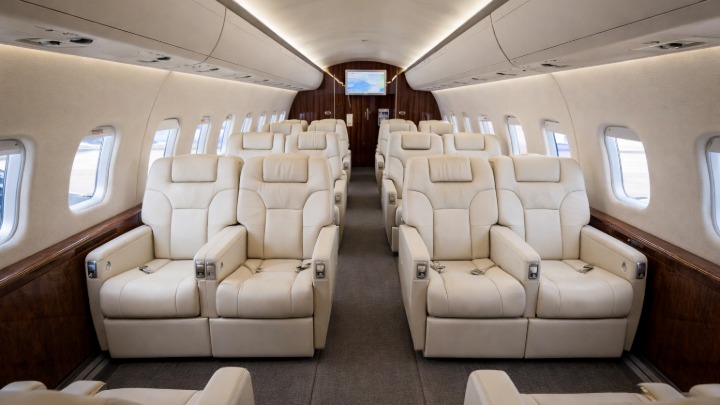
Conventional airline-style interior
Analog-to-early digital flight deck typical of its era
The aircraft was engineered for efficiency rather than passenger luxury, with limited overhead storage and a non-stand-up cabin.
The CRJ-200 saw widespread use among regional airlines throughout the late 1990s and early 2000s. Over time, many major carriers phased the aircraft out due to operating economics, fuel efficiency considerations, and evolving passenger comfort standards.
Today, the CRJ-200 remains in limited active service worldwide, primarily in:
ACMI and wet-lease operations
Sports team or group shuttle transport
Government or institutional travel
Cargo and special-mission conversions
The Bombardier CRJ-200 is considered a legacy regional jet, representing an important stage in the evolution of regional air travel. While it continues to operate in niche roles, it does not align with modern private jet charter expectations or contemporary luxury aviation standards.
This aircraft listing is provided for informational reference only. The Bombardier CRJ-200 is a legacy regional jet and is not part of JetOptions’ modern private jet charter fleet.