8-10 Passengers
106 Baggage Capacity
528 Airspeed
3,660 Range
7.2 Cabin Width
6.0 Cabin Height
28.7 Cabin Length
Enclosed Lavatory Style
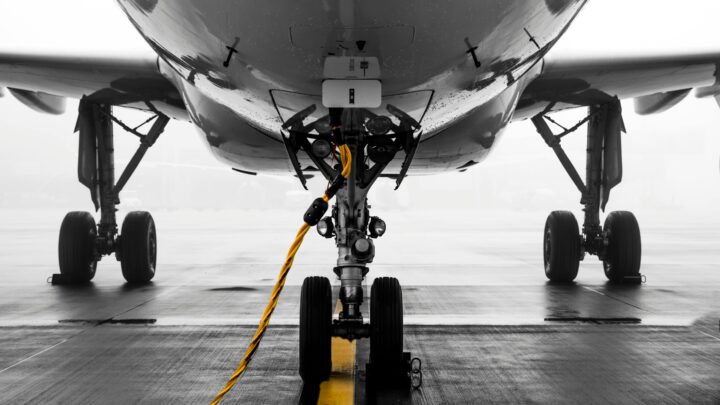
The Bombardier Challenger 350 and Challenger 3500 are the benchmark super-midsize jets in private aviation. More Challenger 350s have been delivered than any other aircraft in its category, and the platform consistently leads its segment in charter demand, operator availability, and dispatch reliability. The 3500, introduced in 2022, is a direct evolution of the 350, same airframe and cabin, upgraded avionics, winglets, and a modest range improvement, making the two aircraft functionally identical for the vast majority of charter missions.
JetOptions clients charter the Challenger 350 and 3500 for US transcontinental routes, Caribbean escapes, short transatlantic hops, and any mission where a group of 6 to 10 passengers needs a stand-up cabin, genuine baggage capacity, and a proven platform, without paying for ultra-long-range capability they do not need.
| Challenger 350 | Challenger 3500 | |
|---|---|---|
| Passenger Capacity | Up to 9 (typical) / 10 (maximum) | Up to 9 (typical) / 10 (maximum) |
| Nonstop Range | 3,200 nm | 3,400 nm |
| Max Cruise Speed | Mach 0.83 / 470 KTAS | Mach 0.83 / 470 KTAS |
| Baggage Capacity | 106 ft³ | 106 ft³ |
| Engines | 2x Honeywell HTF7350 | 2x Honeywell HTF7350 |
| Avionics | Rockwell Collins Pro Line 21 | Honeywell Primus Epic / Pro Line Fusion |
The Challenger 3500 adds winglets, a refreshed cabin interior, and the Pro Line Fusion flight deck over the 350. The cabin dimensions, engines, and operating performance are essentially identical. For most charter missions, both aircraft are equally appropriate; JetOptions will note which variant is available at time of booking.
The Challenger 350 and 3500 cabin measures 28.6 ft in usable length, 7.1 ft in width, and 6.1 ft in height. It is one of the widest stand-up cabins in the super-midsize category, wider than the Citation X, Phenom 300E, and Learjet 75 Liberty. The standard configuration seats up to 10 passengers across a club-four forward, a divan or club-four mid-cabin, and a rear-facing seat or jump seat configuration aft.
Most operator configurations include a refreshment centre and credenza at the forward entry, a fold-out table between each club pair for individual work, and an aft lavatory with enclosed door, a feature absent on several competing super-midsize platforms. Lie-flat sleep is not a standard feature of the Challenger 350 or 3500; for overnight transatlantic crossings requiring flat beds, JetOptions will recommend a heavy jet.
Most chartered Challenger 350 and 3500 aircraft are equipped with Ka-band or Ku-band high-speed Wi-Fi, with a growing number of operators offering Starlink on the 3500. Passengers can expect power outlets and USB ports at seat stations, HD entertainment screens, and Bluetooth audio on most aircraft. The 3500’s updated cabin management system allows lighting, temperature, and entertainment control from personal devices.
For executives requiring confirmed video call capability, JetOptions specifies connectivity per aircraft at time of booking.
The Challenger 350 and 3500 carry a forward galley with microwave, coffee maker, refrigerator, and storage for catering. The galley is compact relative to heavy jet platforms but fully functional for full-service meals, snacks, and beverages on missions up to 7 hours.
JetOptions concierge coordinates catering for every Challenger charter: dietary requirements, custom menus, wine selection, and pre-loaded provisions. Catering briefs are collected at time of booking.
JetOptions and its vetted operators provide:
The typical charter rate for a Bombardier Challenger 350 is $6,500 to $8,500 USD per flight hour. The Challenger 3500 commands a modest premium, typically $7,500 to $9,500 per flight hour, reflecting its newer production, updated avionics, and refreshed cabin. Rates vary based on operator, aircraft age, departure region, and seasonal demand.
The following are representative all-in charter cost estimates based on standard crew, direct routing, and baseline catering. Actual quotes reflect exact routing, availability, and operator selection.
| Route | Airports | Flight Time | Typical All-In Range | Notes |
|---|---|---|---|---|
| New York to Miami | TEB to OPF | 3.0 hrs | $22,000 to $30,000 | Standard crew, nonstop |
| LA to New York | VNY to TEB | 5.0 hrs | $38,000 to $52,000 | Transcontinental nonstop |
| New York to Aspen | TEB to KASE | 4.0 hrs | $30,000 to $42,000 | Conditional on Aspen access; confirm per booking |
| Miami to St. Barths | OPF to TNCM | 2.5 hrs | $20,000 to $28,000 | To St. Maarten; ground or tender transfer to St. Barths |
| Dallas to Cancun | DAL to MMUN | 2.0 hrs | $16,000 to $22,000 | Nonstop, standard crew |
| New York to London | TEB to EGLF | ~8.5 hrs | $70,000 to $90,000 | Tech stop typically required; augmented crew; consider heavy jet for nonstop |
A standard Challenger 350 or 3500 charter quote includes a two-pilot crew, fuel for direct routing, standard ground handling at departure and arrival, and one-time landing fees at each airport. Basic catering is included as part of the standard package.
Additional costs that may apply depending on the route: positioning fees if the aircraft is not at the departure airport, international overflight permits, de-icing on winter routes, and upgrades such as premium catering, customs facilitation, and ground transport coordination.
Because the Challenger 350 is the most widely available super-midsize jet in the charter fleet, positioning distances are typically shorter than for rarer platforms. JetOptions confirms all positioning costs before quote acceptance; they are never added after agreement.
| Specification | Challenger 350 | Challenger 3500 |
|---|---|---|
| Passengers (Typical) | 8 to 9 | 8 to 9 |
| Passengers (Maximum) | 10 | 10 |
| Nonstop Range | 3,200 nm (5,926 km) | 3,400 nm (6,297 km) |
| Max Cruise Speed | Mach 0.83 / 470 KTAS | Mach 0.83 / 470 KTAS |
| Long-Range Cruise Speed | Mach 0.80 | Mach 0.80 |
| Cabin Length (usable) | 28.6 ft | 28.6 ft |
| Cabin Width | 7.1 ft | 7.1 ft |
| Cabin Height | 6.1 ft | 6.1 ft |
| Baggage Volume | 106 ft³ | 106 ft³ |
| Pressurization Altitude Equivalent | 6,000 ft | 6,000 ft |
| Takeoff Distance (MTOW) | 5,082 ft | 5,082 ft |
| Max Cruise Altitude | 45,000 ft | 45,000 ft |
| Engines | 2x Honeywell HTF7350 | 2x Honeywell HTF7350 |
| Avionics | Rockwell Collins Pro Line 21 | Honeywell Pro Line Fusion |
| Key Differentiator | Proven platform; largest available fleet in segment | Winglets, updated avionics, refreshed cabin; modest range improvement |
The Challenger 350 and 3500 require approximately 5,082 ft of runway at maximum takeoff weight, shorter than most heavy jets and giving the platform access to a wider range of airports. The following notes apply to commonly requested airports:
| Airport | ICAO | Access | Notes |
|---|---|---|---|
| Aspen/Pitkin County | KASE | Yes, better than heavy jets | One of the best-suited super-midsize platforms for Aspen. Weight and temperature restrictions still apply; confirm per booking. |
| Telluride Regional | KTEX | Conditional | Short runway at high elevation. Confirm per booking. Montrose (KMTJ) is the reliable alternate. |
| St. Barths Gustavia | TFFJ | No | Not suitable for Challenger 350/3500. Charter to St. Maarten (TNCM) with ground or tender transfer. |
| Teterboro | KTEB | Yes | Primary New York metro departure for Challenger charters. |
| Van Nuys | KVNY | Yes | Primary LA metro departure for Challenger charters. |
| London Farnborough | EGLF | Yes | Accessible with a tech stop eastbound from US East Coast. |
| Nantucket Memorial | KACK | Yes | Shorter runway; Challenger 350/3500 access confirmed within normal weight limits. |
JetOptions confirms runway suitability for every specific route at time of booking. Airport access is affected by season, temperature, passenger weight, and fuel load.
| Route | Airports | Flight Time | Why the Challenger | Typical Passenger Profile |
|---|---|---|---|---|
| New York to Miami | TEB to OPF | 3.0 hrs | Quick hop in full stand-up comfort; best availability in the segment | Corporate, family, leisure |
| LA to New York | VNY to TEB | 5.0 hrs | Transcontinental nonstop; wide cabin for the segment; competitive rate | Entertainment, tech, corporate |
| New York to Aspen | TEB to KASE | 4.0 hrs | One of the best super-midsize platforms for Aspen access | Family, leisure, ski season |
| Dallas to Cabo San Lucas | DAL to MMSD | 2.5 hrs | Short leisure trip; comfortable for a group of 6 to 8 | Family, leisure |
| Miami to the Bahamas / Caribbean | OPF to various | 1.0 to 2.5 hrs | Short hops with full luggage capacity for beach trips | Family, leisure, HNI |
| New York to Chicago | TEB to MDW/PWK | 1.5 hrs | Same-day business travel; faster city-to-city than any commercial option | Corporate, executive |
The Challenger 350 and 3500 sit at the top of the super-midsize category in cabin width and availability. The table below covers the aircraft PAs most often compare when evaluating a Challenger charter.
| Challenger 350 | Challenger 3500 | Citation X+ | Phenom 300E | Learjet 75 | |
|---|---|---|---|---|---|
| Nonstop Range | 3,200 nm | 3,400 nm | 3,460 nm | 2,010 nm | 2,080 nm |
| Cabin Width | 7.1 ft | 7.1 ft | 5.6 ft | 5.1 ft | 5.9 ft |
| Stand-Up Cabin | Yes | Yes | Yes | No | Yes |
| Max Passengers | 10 | 10 | 12 | 9 | 9 |
| Typical Hourly Rate | $6,500–$8,500 | $7,500–$9,500 | $7,000–$9,000 | $5,500–$7,500 | $5,000–$7,000 |
| Max Cruise Speed | Mach 0.83 | Mach 0.83 | Mach 0.935 | Mach 0.80 | Mach 0.81 |
| Best For | Widest cabin + best availability in segment | Same as 350 with updated avionics and cabin | Speed priority on transcontinental routes | Cost-efficient short to medium routes | Value option with stand-up cabin |
A note for PAs comparing the Challenger 350 to the Citation X or X+: the Citation X+ is significantly faster (Mach 0.935 vs Mach 0.83), which saves roughly 30 to 40 minutes on a New York to LA transcontinental. The Challenger 350 has a meaningfully wider cabin (7.1 ft vs 5.6 ft). If transit time is the priority, the Citation X+ wins. If cabin comfort for a group of 8 to 10 is the priority, the Challenger 350 is the better choice.
For longer routes where the Challenger 350 or 3500 falls short of range, JetOptions will recommend the G550 or Global 6000. See flyjetoptions.com/fleet/gulfstream-g550 and flyjetoptions.com/fleet/global-6000.
For PAs coordinating a Challenger charter on behalf of a principal, or executives arranging a domestic or short-international private flight, the following is the standard JetOptions process:
Tell us your route, travel date, group size, and any specific requirements. Your JetOptions Aviation Account Executive will respond within the hour with operator options, aircraft details, and pricing tailored to your itinerary.
No obligation. No pressure. JetOptions provides quotes alongside relevant alternatives so you can make the best decision for your trip.
JetOptions Private Jets is an ARGUS and Wyvern registered charter company with an A+ Better Business Bureau rating. We provide on-demand access to rigorously vetted Bombardier Challenger 350 and 3500 operators worldwide, with every aircraft meeting or exceeding FAA safety standards and backed by $50 million to $250 million in liability coverage.
What is the difference between the Challenger 350 and Challenger 3500?
The Challenger 3500, introduced in 2022, is a direct evolution of the 350. The airframe, engines, and cabin dimensions are identical. Bombardier updated the avionics to the Honeywell Pro Line Fusion flight deck, added winglets that improve fuel efficiency and extend range from 3,200 nm to 3,400 nm, and refreshed the cabin interior with new materials and lighting. For most charter missions the two aircraft are functionally equivalent; the 3500 commands a modest rate premium and represents the current production standard.
How does the Challenger 350 compare to the Citation X in terms of comfort and speed?
The Citation X+ cruises at Mach 0.935, faster than any other business jet currently available for charter, which saves roughly 30 to 40 minutes on a New York to LA transcontinental. The Challenger 350 has a significantly wider cabin: 7.1 ft versus 5.6 ft on the Citation X+. For a group prioritising transit time on a 5-hour transcontinental, the Citation X+ is the stronger option. For a group of 8 to 10 prioritising cabin comfort, the Challenger 350 is typically the better fit. JetOptions will present both where the route and group size make either appropriate.
Can the Challenger 350 or 3500 land at Aspen?
Yes. The Challenger 350 and 3500 are among the best-suited super-midsize jets for Aspen/Pitkin County Airport (KASE). With a takeoff distance of 5,082 ft at MTOW and a shorter landing distance requirement, both aircraft have better access to Aspen than most heavy jets. Weight and temperature restrictions still apply; JetOptions confirms Aspen access for each specific booking date.
Is the Challenger 350 capable of transatlantic routes?
With a range of 3,200 nm, the Challenger 350 can reach London from New York’s east coast airports with a single technical stop, typically Reykjavik (BIRK) or Shannon (EINN). It is not a nonstop transatlantic aircraft. For nonstop New York to London capability, JetOptions recommends the G550, Global 6000, or G650. The Challenger 350 is most effective on routes up to approximately 2,500 nm nonstop, covering all US domestic routes and most Caribbean and Central American destinations without a fuel stop.
How many bags does the Challenger 350 hold?
The Challenger 350 and 3500 have 106 cubic feet of baggage capacity, among the largest in the super-midsize category. In practice this accommodates approximately 8 to 10 standard suitcases. Baggage is accessible in-flight via the aft baggage compartment on most configurations. JetOptions advises PAs on baggage planning at time of booking.
What is a positioning fee and will I be charged one?
A positioning fee applies when the nearest available Challenger 350 or 3500 is not at the departure airport. Because the Challenger 350 is the most widely available super-midsize jet in the charter fleet, with more deliveries than any competing platform in the category, positioning distances tend to be shorter than for rarer aircraft. JetOptions confirms all positioning costs before quote acceptance; they are never added after agreement.
How far in advance do I need to book a Challenger 350 or 3500 charter?
For domestic US routes, 12 to 24 hours notice is typically sufficient given the size of the available fleet. For international routes or complex multi-leg itineraries, 3 to 5 business days gives JetOptions time to confirm operator options, arrange international permits where required, and coordinate FBO availability at both ends. Last-minute Challenger charters are handled regularly; the Challenger 350 fleet gives JetOptions more options at short notice than almost any other aircraft in the category.
What happens if the aircraft has a mechanical issue before departure?
JetOptions maintains operator relationships with multiple Challenger 350 and 3500 operators across the US and internationally. In the event of a mechanical issue, JetOptions immediately sources an equivalent replacement aircraft from its network. Clients are notified directly by their assigned Aviation Account Executive, and JetOptions coordinates all rebooking, FBO changes, and ground transport adjustments. Available 24 hours a day throughout every trip.